Free to use. We are paid by the mover, not by you.
(866) 297-2360
We check the federal safety records, so you don't have to

Let's find you a mover you can actually trust.

Moving to another state is a big day, and picking the right company shouldn't feel like a gamble. We read the federal safety records for all 19,524 licensed interstate movers in America — inspection histories, crash records, fleet sizes — and publish them plainly, so you can see exactly who you're hiring. Then, when you're ready, we connect you with one that fits your move. Free, no forms, no spam — just a phone call.

Call (866) 297-2360 A real person, not a phone tree. Tell us your dates and route and we'll help.
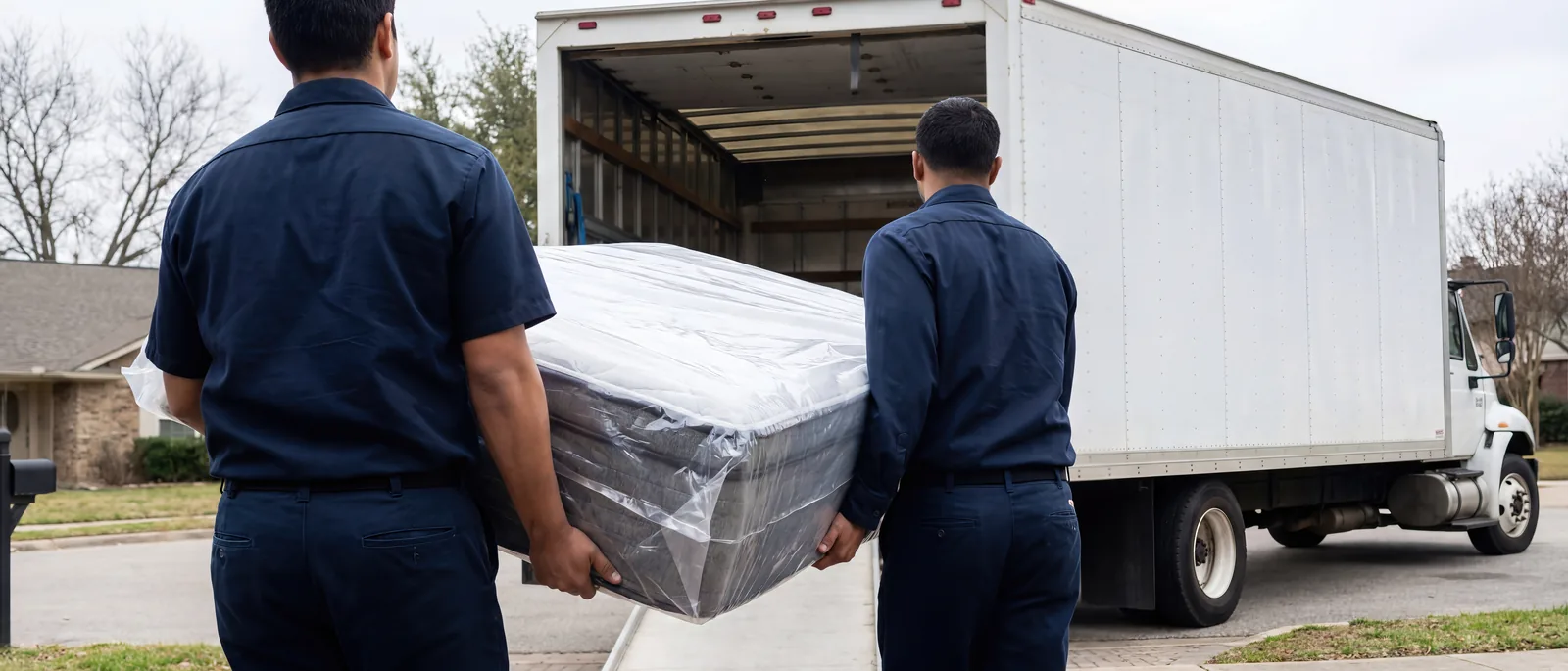
Two movers in uniform carrying a plastic-wrapped mattress up a ramp into a moving truck outside a house

What “licensed and insured” actually tells you — and what we check instead

Every mover advertises it. It means they filed for federal operating authority and carry the minimum insurance — nothing more. A safety rating is different: FMCSA issues one only after a compliance review, and reviews are triggered by complaints, crashes or roadside inspection data. Most carriers are never reviewed.

90.5%

of licensed interstate household goods movers have no federal safety rating of any kind.

No rating — 17,674 carriers Rated — Satisfactory 1,606, Conditional 242

Source: FMCSA Company Census File, filtered to active interstate for-hire carriers authorised for household goods with at least one power unit. n = 19,524. Retrieved 14 August 2026. An unrated carrier is not necessarily unsafe — it means the federal government has not examined them.

How big is the average long distance mover?

Smaller than almost anyone expects. Federal authority is cheap to obtain and the work is seasonal, so the industry is mostly very small operators.

1–2 trucks
12,53464.2%
3–5
3,16116.2%
6–10
1,6148.3%
11–50
1,7278.8%
51+
4882.5%

Power units (trucks, tractors) reported on each carrier's most recent MCS-150 filing. Median across all 19,524 carriers: 2.

Here's what the safety records actually show

A federal safety rating requires a full compliance review, which is rare. A roadside inspection is the everyday version — a truck gets stopped and checked, and if something is wrong enough the vehicle is placed out of service on the spot and cannot move until it is fixed. It is the closest thing to an objective measure of how a mover maintains its fleet.

48.0%

of licensed interstate movers — 9,376 companies — have no roadside inspection on record at all.

178

licensed household goods movers have been involved in a crash that killed someone. Across the industry: 8,624 crashes, 285 deaths and 3,960 injuries on record.

The spread is enormous

Among the 2,910 movers with enough vehicle inspections to measure, the median has 18.2% of inspections end with a truck grounded. The worst tenth run at 42.9% or higher — more than two in five inspections. The national average across all trucks is roughly 20–22%.

Median mover
18.2%out of service
Worst tenth
42.9%out of service

Out-of-service rate = share of a carrier's vehicle inspections that ended with the vehicle grounded. Carriers with at least five vehicle inspections. Source: FMCSA Safety Measurement System, joined to our carrier set on USDOT number (98.8% matched). Retrieved 14 August 2026. Crash counts are not adjusted for fleet size or miles driven — a large carrier records more crashes simply by operating more trucks. Read them alongside fleet size. Read the full study →

Carrier or broker? It decides who is responsible for your things.

This is the distinction the industry is worst at explaining, and it is the one that matters most when something goes wrong.

A carrier moves your shipment

Holds federal operating authority, owns or leases the trucks, employs or contracts the crew, and is legally liable for your goods from pickup to delivery. Their tariff sets the charges.

19,524 active interstate household goods carriers · 1,509 in California, 1,476 in Texas, 1,256 in Florida

A broker arranges it

Never touches your goods. Sells the job to a carrier, who may be one you have never heard of. Perfectly legal and federally registered — but a broker's estimate is not binding on the carrier who turns up, which is where most disputes begin.

Federal rules require a broker to display its MC number and state its broker status plainly. If a site does not, that tells you something.

We label every company on this site carrier or broker, with its USDOT and MC number, so you can verify it yourself at safer.fmcsa.dot.gov.

What a long distance move costs

Placeholder — not for launch. This block ships only once the cost table is built from sourced, dated figures: the Matson household-goods tariff for Hawaii and Alaska, and a documented sample for mainland lanes. Every number will carry its source, its date and its sample size. No estimate goes on this page without one.

The busiest moving routes in America

Households and people who filed taxes from one state and then the next from another. This is the closest thing to a national record of who actually moved where.

FromToHouseholdsPeople
CaliforniaTexas44,41782,481
New YorkNew Jersey43,69973,471
New YorkFlorida43,18771,476
CaliforniaArizona28,40247,885
FloridaGeorgia28,26350,483
New JerseyNew York26,79338,722
CaliforniaNevada26,21043,801
TexasCalifornia24,97041,232
FloridaTexas24,19641,655
GeorgiaFlorida23,47540,689

IRS Statistics of Income migration data, tax years 2022–2023 (filing years). Households = returns filed; people = exemptions claimed. Suppressed cells excluded.

Where the carriers are

Licensed interstate household goods carriers by the state their business is physically based in.

  • CA1,509
  • TX1,476
  • FL1,256
  • GA963
  • IL952
  • NJ858
  • NC829
  • PA797
  • NY687
  • OH660

Physical address state on the FMCSA census record — not where they operate. Most carriers work well beyond their home state.

Moving to or from Alaska and Hawaii

You cannot drive to Honolulu. Household goods travel by ocean container, and the Jones Act (46 U.S.C. §55102) restricts domestic sea cargo to US-built, US-crewed vessels — which means a very small set of carriers, higher prices and a different process from any mainland move. Alaska adds a second problem: roughly four in five communities have no road connection at all.

Hawaii →

Ocean carriers serve the islands from West Coast ports, with onward inter-island legs. Agricultural inspection applies to plants, soil and some household items. Vehicles ship separately and are priced separately.

Alaska →

Road-connected communities can be served by truck via Canada. Everywhere else moves by barge or air, on a schedule set by the season. Portable container companies largely do not serve the state, which changes the options considerably.

The Hawaii page publishes the full 2026–2027 ocean tariff — 27 origin cities, every surcharge. The Alaska page explains the quote-only market honestly.

Long distance movers by city

Licensed carriers within reach of each metro, with fleet size and federal safety record for every one.

Or browse by state:

AL AK AZ AR CA CO CT DE DC FL GA HI ID IL IN IA KS KY LA ME MD MA MI MN MS MO MT NE NV NH NJ NM NY NC ND OH OK OR PA RI SC SD TN TX UT VT VA WA WV WI WY

What this site is, plainly — and a promise

VettedMove is a free referral service. We do not own trucks and we do not move anything. When you call, we connect you with a moving company from the licensed carriers listed on this site.

We are paid by the moving company when a move goes ahead. You are never charged for using this site or for the call. We would rather tell you that plainly than bury it in small print. And because our name is on the referral, we only connect you with carriers whose federal record we can show you — that is the whole point of this site.

Placeholder. The federally required disclosure block — legal entity name, physical address, USDOT and MC numbers, broker status statement, the carrier list, and links to the FMCSA booklets “Ready to Move?” and “Your Rights and Responsibilities When You Move” — sits here, pending counsel's determination under 49 CFR Part 371. This page does not launch without it.

Questions people actually ask

Is a long distance mover the same thing as a broker?
No, and the difference decides who is legally responsible for your things. A carrier holds federal operating authority, owns trucks, and physically moves your shipment — they are liable for it. A broker arranges the move and hands it to a carrier; they never touch your goods. Both are legal and both are regulated, but a broker's estimate is not binding on the carrier who shows up. Every company listed on this site is labelled carrier or broker, with its USDOT and MC number, so you can check it yourself at safer.fmcsa.dot.gov.
How many long distance movers are actually licensed?
There are 19,524 active interstate for-hire household goods carriers registered with the Federal Motor Carrier Safety Administration that operate at least one truck. That is the real size of the industry — far smaller than the number of websites advertising long distance moving would suggest.
What does a federal safety rating mean, and why do most movers not have one?
FMCSA issues a rating — Satisfactory, Conditional or Unsatisfactory — only after a compliance review. Reviews are triggered by complaints, crashes or roadside data, so most carriers are never reviewed at all. In our data 90.5% of licensed interstate household goods movers have no rating of any kind. An unrated mover is not necessarily unsafe; it means the federal government has not examined them. It is the single most misunderstood fact in this industry.
Why do so many long distance movers only have one or two trucks?
Because federal operating authority is inexpensive to obtain and the work is seasonal. 64% of licensed interstate household goods carriers run one or two power units. Small does not mean bad — but it does mean that if your dates slip, a two-truck company has far less capacity to absorb it than a fleet does.
Do you charge me anything?
No. This site is free to use. We are paid by the moving company when a move we referred is completed. That is disclosed here because it is the kind of thing you should know before you call anyone, including us.
Call (866) 297-2360